



Dental implants are used for replacing missing teeth with one or more teeth restored to full function. Getting a dental implant is not a single appointment. It is a process that unfolds over several months, with each stage building on the last. Knowing what happens at each point, and what your body is doing beneath the surface, makes the whole experience easier to navigate.
If you are considering dental implant treatment options, this article walks you through every stage of the dental implant recovery process, from the day of surgery through to receiving your final restoration.
Quick Overview
- Dental implant healing happens in stages: immediate recovery, soft tissue healing, osseointegration, abutment placement, and final restoration.
- The longest stage is osseointegration, where the titanium implant fuses with your jaw bone. This typically takes three to six months.
- Several factors affect dental implant healing, including your overall health, oral hygiene habits, and whether bone grafting was needed.
- Most people feel comfortable within one to two weeks of surgery, even though the deeper bone healing continues for months.
Below, we explain each stage in plain terms so you know what to expect and what to look out for.
Stage One: The Day of Surgery and the First Week
The day of your dental implant surgery, your dentist will place a titanium implant post into the jawbone at the implant site. This is done under local anaesthesia, so you should not feel discomfort during the procedure itself. Once the anaesthetic wears off, some discomfort and swelling are normal and expected.
What you will experience in the first few days
 Swelling, tenderness, and some minor bleeding around the surgical site are all part of a normal healing process. Swelling peaks around day two typically, and then begins to settle. Most people manage this with prescribed pain relief and ice applied to the outside of the face for the first 24 to 48 hours.
You will be advised to eat soft foods and avoid chewing on the implant side. This is not just comfort advice. Placing pressure on a freshly placed implant before the bone has begun to heal can disturb the surgical site and affect what happens in the weeks ahead. Stick to a soft food diet for at least the first week, and follow your dentist’s recovery plan closely to support proper healing throughout.
Keeping the surgical site clean
Oral hygiene matters from day one, but you need to be careful around the implant site. Gentle saltwater rinses can begin within the first 24 hours in most cases. Brushing the rest of your mouth continues as normal, using a soft-bristled brush and keeping pressure away from the implant area. Good oral hygiene around the implant from the start gives the tissue a good environment to heal.
Stage Two: Soft Tissue Healing (Weeks One to Four)
Over the first two to four weeks, gum healing begins as the soft tissue surrounding the implant closes over to protect the site. A protective layer of soft tissue forms around the implant site, shielding it from bacteria and food particles while the deeper healing gets underway.
This stage is when most people start to feel comfortable again. The visible signs of surgery, swelling, tenderness, and sensitivity, settle significantly by the end of the second week for most patients. You can begin introducing softer cooked foods, though you should continue to avoid anything hard, crunchy, or chewy directly on the implant side.
If bone grafting was performed alongside your implant, the gum tissue healing and bone healing happen at the same time. Bone grafting adds to the overall timeline because the grafted material needs to integrate with the existing bone before full osseointegration can proceed. Your personalised treatment plan will account for this.
Stage Three: Osseointegration (Months One to Six)
This is the most important stage in the dental implant process, and it is the one that takes the longest.
The process called osseointegration is when your jawbone grows directly onto and around the titanium implant. Most people experience mild discomfort in the days after surgery. The osseointegration process itself produces no sensation, as bone tissue and bone growth gradually develop around the implant, creating a structural bond that allows it to function as an artificial tooth root. This is what gives a dental implant its stability. Without it, the final restoration has no stable foundation to anchor to.
The process cannot be rushed. Research confirms that osseointegration typically takes three to six months, though this varies depending on bone density, bone quality, and your overall health. During this period, you may feel very little. The implant should feel stable, and most people return to normal daily activities within two weeks of surgery, but the biological work happening in the bone continues for months.
What affects how long osseointegration takes
Several factors influence the osseointegration timeline: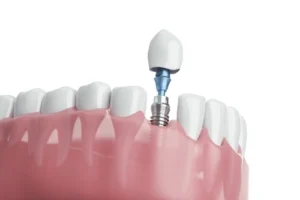
- Bone density and quality: Denser, healthier bone generally integrates faster. Lower bone density, whether due to age, gum disease, or previous bone loss, can extend the process.
- Location in the mouth: The upper jaw typically has lower bone density than the lower jaw, which can mean a longer integration period for implants placed in the upper arch.
- Bone grafting: If a bone graft is needed to build sufficient bone before or at the time of implant placement, the timeline extends. The graft must integrate first before osseointegration of the implant itself can be completed.
- Overall health: Pre-existing medical conditions such as diabetes, immune disorders, or conditions requiring medications that affect bone health can slow healing. Smoking significantly reduces blood flow to the healing site and is one of the most common reasons for slow healing and implant failure.
Research confirms that healing requires time after placement and that bone healing cannot be accelerated without compromising the quality of the bond formed between the implant and the bone.
Stage Four: Abutment Placement
Once osseointegration is confirmed, usually through clinical assessment and imaging, the next stage is abutment placement.
The abutment is the connector piece that attaches to the top of the implant post and supports the final crown. In some cases, the abutment is placed at the same time as the implant in a single-stage approach. In a two-stage approach, a minor surgery is needed to reopen the gum tissue for proper healing of the abutment area and attach the abutment.
After abutment placement, a short healing period of two to four weeks allows the gum tissue surrounding the abutment to settle and form the right shape for the final crown. During this time, a temporary restoration or healing cap may be placed to protect the site and maintain the shape of the gum tissue.
Stage Five: Final Restoration
The final restoration, your replacement tooth, is placed once the gum tissue around the abutment has healed and impressions of your mouth have been taken. A custom-made crown is fabricated to match the shape, size, and colour of your surrounding teeth and nearby teeth, and it is then attached to the abutment either with a screw or dental cement.
This is the point where the dental implant procedure is complete. The crown functions as a natural tooth. You can eat normally, brush and floss as you would any other tooth, and in most cases, you should not be able to tell the difference between your implant and your natural teeth.
What Can Delay Healing
Certain factors can slow down or complicate any of the stages described above.
Smoking is the most significant lifestyle factor. Nicotine restricts blood flow to the healing site and impairs the body’s ability to form new bone and gum tissue. If you smoke, your dentist will strongly advise you to stop before surgery and throughout the healing process.
Poor oral hygiene allows bacteria to accumulate around the implant site, which can lead to peri-implantitis, an infection of the tissue around the implant that causes bone loss and can result in implant failure. Maintaining good oral hygiene throughout every stage of healing is not optional.
Research confirms that commonly identified reasons for complications include pre-existing medical conditions, smoking, and poor oral hygiene, and that most of these risks can be reduced with appropriate planning and aftercare.
Persistent pain, swelling that worsens rather than improves after the first few days, or any looseness in the implant should prompt a call to your dentist immediately. Early intervention when something is wrong gives you the widest range of options.
Post-Operative Care and Long-Term Maintenance
Following your dentist’s post-operative care instructions is one of the most important things you can do for a smooth recovery and proper care of the implant site. This includes taking prescribed pain medications as directed, eating soft foods, avoiding smoking, and keeping the surgical site clean without disturbing it.
Once the implant is fully integrated and the final restoration is in place, maintaining dental health long-term follows the same principles as caring for natural teeth. Research confirms that implant care and follow-up visits are central to long-term implant success. With proper care, including brushing twice daily, flossing around the implant, and attending regular dental check-ups, your implant can serve you well for many years. Let your dentist know if anything feels different.
Most dental implants, when placed in a suitable candidate and maintained well, provide a stable tooth replacement option.
Ready to Start? Talk to the Team at Harris Dental Boutique
 Understanding the dental implant healing stages is one thing. Knowing whether implants are right for you is the next step, and that starts with an assessment.
At Harris Dental Boutique, Dr Linc and the team work through a thorough initial consultation to assess your bone density, oral health, and overall suitability for implants before any treatment begins. If a tooth extraction, bone grafting, or additional preparation is needed, this will be mapped out as part of your personalised treatment plan so you know exactly what to expect and when. We use CBCT imaging and 3D scanning to assess your jaw in detail, which means your treatment plan is based on precise information rather than estimates. To find out whether dental implants are suitable for you, please call us on (07) 4158 5813.
Frequently Asked Questions
Is it normal to feel nothing during the osseointegration phase?
Yes, and many people find this surprising. While osseointegration takes several months, it does not cause discomfort once the initial post-surgical period has settled. Most people feel comfortable and return to normal daily life within one to two weeks of surgery. The biological work of bone forming around the implant happens without any sensation. This is why follow-up appointments matter, as your dentist monitors progress through imaging rather than relying on how you feel.
Can I drink alcohol during the dental implant healing period?
It is advisable to avoid alcohol for at least the first week after implant surgery, and to limit it during the broader healing period. Alcohol impairs immune function and interferes with the body’s ability to form new bone tissue, both of which are critical in the weeks after surgery. It can also interact with prescribed pain medications and antibiotics. Your dentist will give you specific guidance based on your treatment and recovery plan.
Can I exercise after dental implant surgery?
Light activity is generally fine within a few days of surgery, but strenuous exercise should be avoided for at least the first week. Physical exertion increases blood pressure and blood flow, which can cause the surgical site to bleed or swell more than expected. Gym sessions, running, sports, and heavy lifting are avoided until your dentist confirms the site has settled. After that initial period, gradually returning to your normal routine is usually straightforward.
Any surgical or invasive procedure carries risks. Before proceeding, you should seek a second opinion from an appropriately qualified health practitioner.
References
https://www.colgate.com/en-us/oral-health/implants/what-are-dental-implants
https://www.betterhealth.vic.gov.au/health/conditionsandtreatments/dental-treatment