



The dental bone graft healing stages are the steps your body works through to turn graft material into solid, natural bone. If you have had, or are about to have, a graft, knowing how that healing unfolds makes the whole process far less worrying and helps you spot when something is not quite right.
A dental bone graft rebuilds bone in the jaw so there is enough to support treatment, and it usually forms a step on the way to dental implant treatment. Because bone grows slowly, healing happens over months rather than days, in fairly predictable stages. This guide walks through each stage, how to support your recovery, and the signs worth watching for.
Quick Overview
- A dental bone graft heals in stages, beginning with a blood clot in the first days and ending with mature, natural bone months later.
- Early healing focuses on the gum and soft tissue, while the slower work of bone growth continues quietly underneath.
- Sticking to soft foods, gentle oral hygiene, and your dentist’s advice gives the graft the conditions it needs to heal.
- Most discomfort settles within a week, and worsening pain or persistent swelling is a sign to contact your dentist.
Below, we walk through what a bone graft is, the healing stages one by one, how to support recovery, and when to seek help.
What is a dental bone graft, and why does healing happen in stages?
A dental bone graft is a minor procedure that adds bone graft material to an area of the jaw where bone is missing or thin. The material might come from your own body, from a donor, from animal bone, or from synthetic materials, but in every case it is designed to be gradually replaced by your own new bone rather than to stay unchanged.
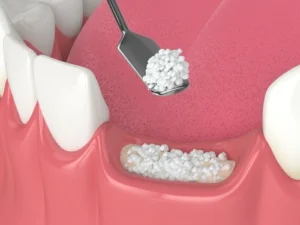 That replacement is the reason healing happens in stages. Your body does not treat the graft as a finished result; it treats it as a scaffold. Grafts are usually needed because the jaw has lost bone in the first place, and gum disease and tooth loss are among the most common causes of bone loss, along with tooth extraction and injury. The graft acts as a framework that holds space and gives your bone-forming cells somewhere to grow.
From there, cells move in, blood vessels form, and new bone is laid down and then strengthened, one step at a time. Because living bones can only grow so quickly, this sequence, the dental bone graft healing stages, plays out across weeks and months rather than days. The upside of that slower pace is a result built to last, because the finished bone is genuinely your own rather than a filler that simply stays in place.
The dental bone graft healing stages
Every patient heals a little differently, but the graft healing stages tend to follow the same broad pattern. Here is what happens at each point along the bone graft healing timeline, and what you are likely to notice as it unfolds.
Stage 1: The first few days
In the first stage, the surgical site forms a protective blood clot. Once the graft is placed and the gum is closed, usually with small stitches, a blood clot forms over the area, sealing it and beginning the healing process. This clot is the foundation for everything that follows, so protecting it in the early days is one of the most important things you can do.
As the local anaesthetic wears off on the first day, it is normal to feel some tenderness and to notice minor bleeding or oozing for the first 12 to 24 hours. Swelling usually builds over the first couple of days and tends to peak around 48 hours before easing. Caring for the area gently in these first days is an important part of the healing process. Rest with your head elevated, use ice packs against your cheek to settle swelling, and stick to cool, soft foods so you are not disturbing the surgical area.
Avoiding vigorous rinsing, drinking through straws, and smoking all help keep the clot in place, because dislodging it early can set healing back. This first stage is the most noticeable, but for most patients it settles quickly. It is common to feel most fragile on the first evening, so plan a quiet night, keep your pain relief handy, and prop yourself up with an extra pillow to ease any throbbing while you sleep.
Stage 2: The first few weeks
Over the next couple of weeks, attention shifts to the soft tissue. The gum tissue begins closing over the graft site, and beneath the surface, new blood vessels start to grow into the area. This blood vessel growth is quietly important, because good blood flow delivers the cells, oxygen and nutrients that bone growth depends on.
If you had stitches, dissolvable ones fade away around now, or non-dissolvable ones are removed at a short review. By the end of this stage, the outside of the wound usually looks well on the way to healed, and you can generally return to gentle brushing near the area as your dentist advises. Most of the discomfort has settled, and many patients feel largely back to normal, which can make it easy to forget the graft is still working hard underneath.
It is worth staying careful with the surgical area even when it feels fine, because the deeper bone healing is only just getting underway. This gap between feeling healed and actually being healed is completely normal, and it is the main reason your dentist sets the pace for what you can do next.
Stage 3: Bone formation over the following months
This is where the slow, real work happens, mostly out of sight. Bone cells migrate into the graft and bone begins forming, gradually turning the graft material into living tissue. As the graft integrates, your body breaks down the original bone graft particles and replaces them with new bone growth of its own, a natural process of bone regeneration.
At this point, the bone is still immature, meaning it is newly formed and has not yet reached full strength. The grafted bone is knitting into the existing bone around it, a process called bone integration, and it steadily becomes denser. This stage usually spans several months, and there is very little to see or feel; it simply happens quietly beneath healed gum.
Because it is invisible, this is the stage that tests patience the most, but moving to the next step before the bone is ready can compromise the result. Your dentist may take scans during this time to check how the deeper bone is progressing. In simple terms, the graft is slowly swapped out for your own bone, a little at a time, so the finished area ends up as living bone rather than the material that was first placed.
Stage 4: Bone maturation and readiness for an implant
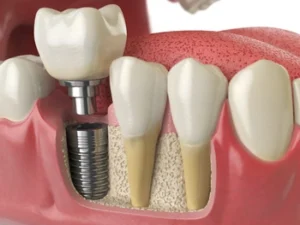
In the final stage, the newly formed bone matures. The immature bone remodels into denser, mature natural bone with the bone density needed to hold an implant securely. Only once this bone maturation is complete is the area truly ready for the next step.
An implant needs enough bone around it to stay stable, so your dentist confirms the graft has fully matured, often with imaging, before implant placement goes ahead. How long this takes varies: a small graft may be ready in a few months, while larger grafts can take longer. In some situations a graft and implant can be placed together, but more often the graft is given the full healing time first, so there is solid, mature bone to anchor into.
Your dentist will not set a date for the implant until the bone can clearly support it, and by that point the grafted area behaves much like the rest of your jaw. Either way, this stage is what turns months of quiet healing into the strong, stable base an implant relies on.
Do different bone grafts heal differently?
Patients often ask whether the source of the graft changes how healing feels or how long it takes. The honest answer is that the broad stages are similar for every graft, but there are a few differences worth knowing.
A graft made from your own bone tends to integrate quickly, because it already contains living cells, though it does mean a second small site where the bone was taken. Donor bone and animal bone are processed to leave a mineral framework that your body slowly replaces with its own bone, while synthetic materials do the same job without any human or animal tissue.
All of them are designed to be taken over by natural bone in time, so the end point, mature bone that can hold an implant, is the same. What tends to matter more than the material itself is the size and location of the graft: a large graft, or one placed in the upper jaw near the sinus, generally takes longer to heal than a small one. Your dentist chooses the graft material to suit your situation and will explain what it means for your timeline.
How to support your bone graft healing
While your body does the healing, a few simple habits give the graft the conditions to do its job well. None of it is complicated, but consistency counts, especially in the first couple of weeks.
For the first week or so, a soft food diet takes pressure off the graft site. Ease back towards normal chewing gradually, and keep avoiding hard or crunchy foods, along with very hot or very hard foods, until your dentist says the area is ready. Staying hydrated and eating well supports healing more broadly, and soft, protein-rich foods such as eggs, yoghurt and soup can make the first week easier while you avoid tougher textures. Good daily oral hygiene protects the whole mouth, but around the graft it needs to be gentle: your dentist will show you how to keep the area clean without brushing directly on it too soon, and a prescribed rinse may be suggested.
Rest in the first few days, and avoid smoking and alcohol, both of which reduce blood flow and slow wound healing. Take any medication exactly as directed, keep your follow-up appointments, and call the clinic if you are unsure about anything rather than guessing. Ultimately, the specific advice your dentist gives you matters more than any general rule, because it is tailored to your graft and your health.
Warning signs to watch for during healing
Most bone grafts heal without any trouble, and a little discomfort and swelling early on is completely normal. It helps, though, to know the difference between ordinary healing and a problem that needs attention, so you can seek early treatment if something is not right.
Contact your dentist promptly if you notice any of the following:
- Severe pain, or worsening pain that increases after the first few days rather than easing.
- Persistent swelling that does not begin to settle after two or three days, or that gets worse.
- Increasing pain combined with a bad taste, an unpleasant smell, or discharge, which can point to infection.
- Bleeding that will not stop, or the sense that graft material is coming away from the site.
None of these automatically means something serious, but they are worth checking rather than waiting and hoping. As with most issues after dental surgery, acting early usually makes any problem far simpler to treat.
What affects how well a bone graft heals
Healing is not identical for everyone, and several things influence how smoothly it goes. Understanding them helps you set realistic expectations and take charge of the parts you can.
 Your general health plays a large part. Certain medical conditions, including diabetes and some autoimmune disorders, can slow healing, and some medications affect how bone repairs, which is why your dentist reviews your history beforehand. Smoking is one of the biggest hurdles, because it restricts blood flow to the area and raises the risk of problems.
Age and nutrition play a role too, as does the oral health you go into the procedure with; active gum disease, for example, is usually treated first so it does not undermine the graft. Your existing bone density and how closely you follow your aftercare both feed into the outcome as well. The encouraging part is that many of these factors are within your control, and looking after the basics such as good oral hygiene, no smoking, sensible eating and rest gives your graft a strong chance to heal well and become the base your future dental treatment needs.
If you are ever unsure whether something you are doing might affect healing, a quick call to the clinic is always better than guessing.
Talk to Harris Dental Boutique about your bone graft
If you are preparing for a bone graft, or you are healing from one and have questions along the way, it helps to have clear guidance from a team that knows your case. At Harris Dental Boutique, we talk you through each stage of healing, check the graft is progressing as it should, and are here if anything feels off.
To talk through your treatment or your recovery, please call us on 07 4158 5813.
Frequently Asked Questions
Will I be able to tell the bone graft is there while it heals?
Mostly, no. Once the gum closes over the graft in the first couple of weeks, there is usually nothing obvious to see, and the graft sits below the gumline rather than sticking out. You might feel a slight firmness or a small bump in the area at first, which settles as things heal. If anything feels sharp, loose, or like a particle has worked its way out, let your dentist know so they can take a look.
How much does a dental bone graft cost?
The cost varies depending on the size of the graft, the material used, and whether it is done alongside other treatments such as an extraction or implant. Because every case differs, the only accurate figure comes from an assessment and a written quote. Some health funds contribute under major dental cover, so it is worth checking your policy and asking whether the graft is bundled with your implant treatment when you compare costs.
When can I exercise again after a bone graft?
It is sensible to rest for the first couple of days and avoid strenuous exercise for around a week, since raising your heart rate too soon can increase bleeding and swelling at the graft site. Light activity is usually fine sooner. Your dentist will give you a clearer idea based on the size of your graft.
Will I have stitches after a bone graft, and when do they come out?
Many bone grafts are closed with small stitches to hold the gum over the graft while it heals. Some are dissolvable and disappear on their own over a week or two, while others are removed at a short follow-up visit. Your dentist will tell you which type you have and what to expect.
Can I have a dental implant placed at the same time as a bone graft?
Sometimes, yes. If only a small amount of bone is needed, a graft and implant can occasionally be placed in the same procedure. More often, especially with larger grafts, the graft is left to heal first so there is solid bone to anchor the implant. Placing them together can shorten the overall timeline, but it only suits cases where there is already reasonable bone to begin with. Detailed imaging helps your dentist decide which approach suits you.
Note: Any surgical or invasive procedure carries risks. Before proceeding, you should seek a second opinion from an appropriately qualified health practitioner.
References
https://www.teeth.org.au/dental-implants
https://www.betterhealth.vic.gov.au/health/conditionsandtreatments/dental-treatment