



You get home from surgery, unfold the printed instructions, and there it is on the list. No milk, no yoghurt, no cheese. Why no dairy after dental implant surgery is one of the questions that comes up most in the first days of recovery, and the sheet rarely explains it.
It is a fair question, because the reason is not obvious, and not all of it is about dairy itself. An implant replaces missing teeth with a root that the jaw grows around, so post-operative care over the first week does real work. If you are preparing for or recovering from dental implant treatment, here is what sits behind the advice, and what matters more than the dairy.
Quick Overview
- The dairy restriction after implant surgery is short, and it applies to the initial healing period, not the months that follow.
- The clearest reason relates to timing around certain antibiotics, because calcium affects how well some of them are absorbed.
- Food temperature and texture matter more for the surgical site in the first days than whether a food contains dairy.
- Calcium-fortified plant milks cover the same nutritional ground while dairy is off the menu.
The sections below cover why dairy appears on the list, how calcium interacts with antibiotics, what matters more in the first days, which alternatives to reach for, and when normal eating resumes.
So why does dairy end up on the avoid list?
The explanation given most often is increased mucus production, and the concern that excess mucus around a healing surgical site is unhelpful. The evidence for dairy actually increasing mucus is limited, and the thick sensation many patients notice comes from the texture of milk coating the mouth.
The practical reasons hold up better. Dairy products are often eaten cold, straight out of the fridge, and cold foods sit awkwardly against a fresh wound in the early healing phase. Consuming dairy products usually means a spoon and a swirl around the mouth as well, which is exactly the movement to avoid near an implant site.
Then there is the antibiotic question, which is the one specific and well-documented reason to think about timing.
Dairy, calcium and your antibiotics
Not every patient is prescribed an antibiotic after a dental implant procedure, and only some antibiotics are affected by calcium. Where it does apply, the answer is usually about spacing doses, not avoiding dairy at all. Antacids, along with iron, zinc and magnesium supplements, can matter for the same reason.
Avoiding dairy altogether for a few days is simply the easier version of that instruction. If you have been prescribed anything after your surgery, ask about food timing before you start the course.
What matters more than dairy in the first days
 Texture and temperature do more damage than any single food group. A blood clot forms over the surgical area after dental surgery, and disturbing it early is what sets the healing process back.
Do not rinse your mouth for the first 24 hours, since this may disturb the blood clot, and avoid swishing food or drink around your mouth for the same reason. Nothing too hot or too cold on the first day. Following surgery, a diet of fluids and soft foods gives the healing tissues the easiest ride, with a return to normal eating across the following week.
That means crunchy foods, raw vegetables, chewy foods and anything with sharp edges stay off the plate for now. Choose foods that require minimal chewing: scrambled eggs, mashed potatoes, soup, ground meat, soft fruits. Acidic foods can sting an open wound, so citrus and tomato are worth delaying too.
Eating soft foods is only half of it. Good oral hygiene through this week supports proper healing and lowers the risk of a bacterial infection taking hold, so keep brushing the rest of your mouth normally and treat the wound gently.
Dairy-free alternatives that still support healing
Tissue repair runs on protein, and bone health runs partly on calcium, so skipping dairy without replacing those essential nutrients is the part worth planning.
Plant-based milks are the straightforward swap, and the calcium-fortified varieties are the ones to look for, aiming for 100 mg of calcium per 100 ml. Soy milk sits closest to cow’s milk nutritionally and generally carries more protein than the others. Oat milk is the creamiest and works well in cooking, though it tends to be low in calcium unless fortified. Almond milk is naturally low in protein, so check the label if it is your main choice.
Beyond the milks, soft tofu, canned salmon with the bones, and smooth nut butters all contribute. Non-dairy alternatives cover the same ground while the body begins tissue healing in the gum tissue around the implant.
When can you eat normally again?
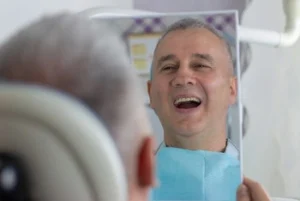 Most patients move back towards a normal diet within the first week of the recovery period, and food restrictions ease as the sensitive surgical site settles, rather than all at once.
The soft food diet is particularly important during the first 24 to 48 hours. From there, other foods are reintroduced gradually, guided by comfort at the implant site. Soft tissue closes over first, while bone continues to integrate for months afterwards, and that later stage does not carry the same dietary restrictions as the initial recovery phase.
Your dental practitioner confirms when the area has healed enough to chew on that side normally, and that assessment happens at your review appointment.
Talk to Harris Dental Boutique about your implant recovery
Recovery advice works when it fits the person and the procedure, and a generic food list rarely does either. At Harris Dental Boutique, we give you instructions written for the surgery you have had, answer questions about food and medicines before you leave, and check the site at your follow-up appointments. If something feels off between visits, that is worth a phone call instead of a wait. To ask about your recovery or to book a review, please call us on 07 4158 5813.
Frequently Asked Questions
Can I eat ice cream after implant surgery?
Ice cream is soft, which makes it look like an obvious choice after surgery. Sugar is what sets it apart from other soft dairy foods, and sugar sitting against a healing site is worth avoiding in the first few days. Wait until you are eating normally again.
Is lactose-free milk treated any differently?
No. Lactose-free milk still contains calcium, so if you have been asked to space calcium around a medicine, it counts the same as regular milk. Lactose is not the part of the dairy that the advice is concerned with.
Can eating dairy cause implant failure?
Dairy on its own is not established as a cause of implant failure. Inflammation and infection around an implant, along with smoking, carry far more weight. Your overall oral health, including how you care for the natural teeth beside the implant, counts for more than any single food.
Should I avoid dairy before implant surgery too?
No. The advice applies to recovery, not the lead-up. If anything needs to change about eating or drinking on the day of your procedure, you will be told when the appointment is booked.
What if I forget and eat something with dairy in it?
One serve is not a setback, and there is no need to treat it as one. Return to the soft food approach at your next meal, and if you are taking a medicine that needs spacing, take the timing into account for the next dose.
Any surgical or invasive procedure carries risks. Before proceeding, you should seek a second opinion from an appropriately qualified health practitioner.
References
https://www.teeth.org.au/dental-implants
https://www.betterhealth.vic.gov.au/health/healthyliving/Dairy-and-dairy-alternatives