



Getting your dental implant procedure right does not stop when you leave the chair. What you eat in the days and weeks after surgery plays a direct role in how well your implant heals. Choosing the wrong foods can disturb the surgical site, interfere with bone healing, and, in some cases, lead to complications that take time to resolve.
This guide covers the foods to avoid after dental implant surgery, what you can eat after dental implant placement, and how your diet protects your natural teeth and the implant site.
Quick Overview
- The first few weeks after implant surgery are critical. Your diet plays a significant role in protecting the surgical site and supporting the healing process.
- Hard, crunchy, sticky, hot, spicy, and acidic foods all pose risks to a new dental implant for different reasons.
- A soft food diet in the initial consultation recovery period gives your implant a good environment to fuse with the bone.
Below, we explain each category of foods to avoid and the reason each one poses a risk.
Why Your Diet Matters After Implant Surgery
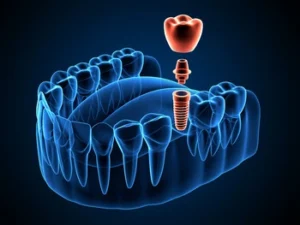 When a dental implant is placed, your body begins the process called osseointegration, where the surrounding bone tissue grows around the titanium implant to create a stable foundation. This process takes weeks to months, and it is happening beneath the surface, whether or not you can feel it.
Eating the wrong foods during this period can disturb the implant site, introduce bacterial growth, cause unnecessary stress on the surrounding bone, or dislodge the blood clot formation that protects the surgical site in the early days. Eating soft foods after implant surgery is one of the key post-operative care instructions issued after dental implant placement.
The result of poor food choices can range from delayed healing to implant failure. Neither is worth the risk for the sake of a favourite meal.
Foods to Avoid After Dental Implant Surgery
Hard and crunchy foods
Hard candy, popcorn kernels, raw vegetables, crusty bread, and hard foods of any kind should be avoided in the first few weeks after implant surgery. Biting into hard and crunchy foods places direct mechanical pressure on the implant area before the bone has had a chance to stabilise around it. This can shift the implant, damage the implant site, or crack the surrounding teeth.
Even foods that seem moderately firm, like hard fruits or crackers, can cause problems during the initial healing phase. Until your dentist clears you for normal eating, treat hard or crunchy foods as off limits.
Sticky and chewy foods
Chewing gum, tough meats, chewy lollies, and sticky foods like dried fruit or toffee create a pulling and tugging motion that can disturb the implant site and the surrounding gum tissue. Sticky foods can also trap food particles around the implant area. Good oral hygiene becomes harder to maintain when sticky residue builds up, promoting plaque buildup and bacterial growth, which increases infection risk.
Hot foods and hot beverages
Hot soup, hot sauce, hot tea, and other hot foods and hot beverages cause blood vessels near the surgical site to dilate. This can increase bleeding and swelling, and interfere with blood clot formation in the early recovery period. Room temperature foods and cold foods are far safer choices in the first few days. Herbal teas are fine once they have cooled to room temperature.
Spicy and acidic foods
Spicy foods and acidic foods, including citrus fruits, tomato-based sauces, and vinegar-heavy dressings, can irritate the soft tissue surrounding the implant site and cause inflammation. Spicy and hot foods can also mask discomfort that would otherwise signal a problem, meaning issues may go unnoticed for longer.
Carbonated beverages are also worth avoiding during the early recovery process. The acidity can irritate healing tissue, and the carbonation may interfere with blood clot formation at the surgical site.
Alcohol
Alcohol slows the healing process by impairing immune function and interfering with blood clot formation. It can also interact with prescribed pain medications. Avoid alcohol for at least the first week after dental implant surgery, and check with your dentist if you are unsure when it is safe to resume.
What You Can Eat Instead
Scrambled eggs, mashed potatoes, soft bread, yoghurt, soft fruits, smooth soups at room temperature, and dairy products like cottage cheese are all good options. Clinical guidance confirms that a soft diet after oral surgery is recommended to keep the area clean from food particles while healing. Aim for foods that require minimal chewing and sit at room temperature or cool.
How Long Should You Follow a Soft Diet?
For most people, a soft food diet is recommended for at least the first one to two weeks after implant surgery, though your dentist will advise based on your specific procedure. New dental implants still need protection beyond this initial phase. Certain foods, particularly hard or crunchy foods, should be approached with care throughout the osseointegration process. Proper care throughout this period supports your gum health and gives your implant the conditions it needs to heal well.
Not Sure What to Eat After Your Implant? We Can Help
 Recovery after dental implant surgery is straightforward when you know what to do and what to avoid. At Harris Dental Boutique, Dr Linc and the team provide clear post-operative guidance as part of every dental implant procedure, so you are never left guessing about your diet or oral health during recovery.
If you have questions about your recovery or want to arrange an initial consultation about replacing missing teeth with dental implants, please call us on (07) 4158 5813.
Frequently Asked Questions
Can I use a straw after dental implant surgery?
No. Using a straw creates suction pressure in the mouth that can dislodge the blood clot at the surgical site, similar to the dry socket risk after a tooth extraction. This can delay healing and increase the risk of infection. Avoid straws for at least the first week after dental implant surgery, or until your dentist advises it is safe to do so.
Can I eat on both sides of my mouth after dental implant surgery?
No, not in the early stages. Chewing on the side where the implant was placed places direct pressure on the surgical site before the bone has stabilised. Keep chewing on the opposite side for at least the first one to two weeks, and follow your dentist’s guidance on when it is safe to resume normal chewing on the implant side. Even soft foods should be directed away from the implant area during the initial recovery period.
Any surgical or invasive procedure carries risks. Before proceeding, you should seek a second opinion from an appropriately qualified health practitioner.
References
https://ada.org.au/policy-statement-2-2-2-diet-nutrition
https://www.mayoclinic.org/tests-procedures/dental-implant-surgery/about/pac-20384622