
Choosing between veneers vs crowns vs bonding usually comes down to one question: how much of the tooth needs covering, and how much natural tooth has to be reshaped to do it. All three change how a tooth looks. Only one of them is built to hold a weakened tooth together.
If you have a chipped front tooth, a small gap between your front teeth, or a back tooth that keeps breaking down, more than one treatment can usually address it. These three cosmetic dentistry treatments are not interchangeable. Each covers a different amount of the tooth, and each asks something different of the tooth underneath.
This guide explains what bonding, veneers and crowns actually do, what each one costs you in tooth structure, when your dentist would rule one out, and how to look after the result.
Quick Overview
- The choice between veneers vs crowns vs bonding turns on how much of the tooth is covered and how much natural enamel is removed.
- Tooth-coloured composite resin is shaped directly onto the tooth for bonding, while veneers and crowns are made outside the mouth and cemented into place.
- Bonding suits minor chips and small gaps, veneers cover the entire front surface of a tooth, and crowns restore teeth with significant structural damage.
- Crown and veneer preparation removes tooth structure that does not grow back, so the tooth will need a restoration from that point on.
Below, we compare the three treatments one by one, look at what rules each option out, and explain how to care for the result.
Veneers vs Crowns vs Bonding: The Three Options at a Glance
Each treatment covers a different amount of the tooth, and that difference shapes what it can correct.
Dental bonding adds tooth-coloured composite resin to part of a tooth. Your dentist shapes it by hand and sets it with a special light.
A dental veneer is a thin layer of porcelain or composite resin bonded across the front surface of a tooth. It leaves the back and biting surfaces untouched.
A dental crown is a shell that sits over the entire tooth and carries the chewing load rather than sitting on top of it.
What Is Dental Bonding and What Can It Fix?
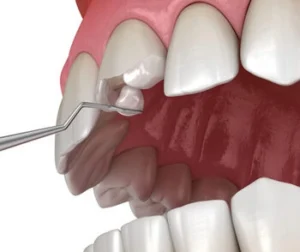 Tooth bonding uses composite resin, the same tooth-coloured material used for white fillings. Your dentist applies it to the tooth surface in layers, shapes it, hardens each layer with a special light, then polishes it smooth.
Composite bonding handles minor cosmetic fixes. Minor chips, small gaps between front teeth, slightly uneven teeth and worn edges are the usual reasons for it.
Its main advantage is that it adds rather than removes. In many cases, little or no enamel removal is needed, so the tooth underneath stays close to intact. Bonding is often finished in one visit, with no wait for laboratory work.
The main limitation is wear. Composite is softer than porcelain and picks up surface stain over time, so bonded teeth can dull or discolour at the margins, and they are renewed more often than porcelain.
Composite can usually be polished, repaired or added to without replacing the whole restoration. That makes it a practical starting point, and on some teeth a deliberate temporary solution.
What Are Porcelain Veneers and How Are They Fitted?
A veneer is a thin shell bonded over the entire front surface of a tooth. Porcelain veneers are made outside the mouth by a dental technician, then cemented into place.
Custom veneers usually take at least two appointments. At the first, your dentist takes a mould or a digital scan and may reduce a thin layer of enamel so the veneer sits flush against the adjacent teeth. Temporary veneers may be worn in between.
Porcelain holds its colour and is stain-resistant, which is why it is favoured over composite for larger changes across several teeth. Veneered teeth also match more predictably when a whole front segment is treated.
More than nine in ten veneers last beyond ten years, and the amount of natural enamel preserved during tooth preparation plays a major role in how long they hold. Fracture is the most common reason a veneer fails, and grinding raises that risk.
Because the tooth is prepared to receive a veneer, the result is worth planning properly before anything starts. Individual results vary with your bite, the position of the tooth and the condition of the enamel underneath.
What Is a Dental Crown, and When Is It Needed?
A crown covers the entire tooth and holds what is left of it together under chewing load. It is used when a tooth has lost too much structure for bonding or a veneer to protect it.
The usual reasons are a broken cusp, a crack, a large old filling with little tooth left around it, or heavy decay. A crown is also often placed after root canal treatment, particularly on back teeth, because a tooth treated this way is more brittle.
Treatment usually runs across two appointments. Your dentist reshapes the tooth on all sides, takes a mould or digital scan, and fits a temporary crown while the final one is made.
Crowns can be made from porcelain, zirconia, gold alloy, or porcelain bonded to metal. Tooth-coloured materials are shade-matched to your natural teeth, and the choice depends on where the tooth sits and how much force it takes.
How Much Natural Tooth Structure Does Each Option Remove?
Bonding usually removes no tooth structure at all. A veneer needs a thin layer of enamel reduced from the front of the tooth. A crown needs material taken from the top and all the way around.
Minimal-preparation veneer designs exist where the enamel is thick enough, and bonding can be taken off again if you change your mind. Enamel that has been cut away does not grow back.
Once a tooth is cut for a crown, it will always need one, and a tooth prepared for a veneer may always need a veneer.
A crown is still the right choice for a heavily damaged tooth, because there is little sound structure left to protect. It does mean the order matters. You can move from bonding to a veneer or a crown later, but not the other way.
When Veneers, Crowns or Bonding May Not Suit You
 Active decay, gum disease, heavy grinding and thin enamel can each rule an option out. Any one of them may delay treatment until the mouth is healthy, or point towards a crown rather than a veneer.
Decay and gum disease are treated first, because healthy teeth and gums are the starting point for any cosmetic dentistry.
Veneers may not suit you if you grind or clench your teeth, because the forces involved fracture thin porcelain. A night guard alongside treatment, or a crown, may be discussed instead.
Veneers also rely on an adhesive bond to natural enamel, so a tooth with large existing fillings or heavy erosion may hold a crown more reliably.
Alignment is a separate question. Uneven teeth can sometimes be masked, but a tooth sitting well out of the arch is often moved with orthodontic treatment rather than covered, which avoids cutting tooth structure to disguise its position.
Looking After Veneered, Crowned and Bonded Teeth
Proper care for a restored tooth is much the same as for a natural one, with a few additions.
Brush twice a day with fluoride toothpaste and clean between your teeth daily. The margin where the restoration meets the tooth is where decay starts, and a crowned or veneered tooth can still decay underneath.
Keep your check-up schedule. Your dentist can pick up a leaking margin, an early chip or a change in your bite well before it becomes a larger repair.
Some habits damage restorations. Biting nails, opening packaging with your teeth and chewing ice put point loads on porcelain and composite alike. If you grind at night, a custom night guard protects the work.
A polish at your check-up lifts surface staining from bonded teeth, and cutting back on coffee, tea, red wine, and smoking slows it from returning.
Repair is often possible. Chipped composite can usually be repaired in the chair, while a fractured porcelain veneer or crown more often needs remaking.
Talk to Harris Dental Boutique About Veneers, Crowns and Bonding
 A chipped, worn or discoloured front tooth rarely has one obvious answer, and the amount of enamel removed differs with each option. At Harris Dental Boutique, we assess the tooth, take the X-rays needed to see what is left underneath, and talk through what bonding, a veneer, or a crown would mean for it. Where a tooth is still sound, we will say so, and we will tell you if the conservative option is worth trying first. You receive a written treatment plan with transparent pricing before any treatment begins. To talk through your cosmetic goals, please call us on 07 4158 5813.
Frequently Asked Questions
Is bonding cheaper than veneers or crowns?
Dental bonding is generally the lowest cost of the three, because the work is done chairside in one appointment with no laboratory involved. Veneers cost more per tooth, and crowns more again, as both involve custom fabrication and extra clinical time. The only accurate figure is a written quote after an assessment. A lower upfront cost does not always mean a lower cost over time, because composite is renewed more often than porcelain.
Will teeth whitening lighten veneers, crowns or bonded teeth?
No. Whitening gel works on natural tooth enamel and does not change the colour of porcelain or composite resin. If you are considering whitening, it is done first, and the restoration is then matched to the new shade. Whitening afterwards leaves the restored tooth looking darker than the teeth around it.
Does private health insurance cover cosmetic dental treatments?
Cover depends on your policy and on why the treatment is being done. Restorative work such as a crown on a broken tooth is often claimable under major dental cover, while purely cosmetic bonding or veneers may not be. Waiting periods and annual limits apply, so it is worth calling your fund with the item numbers from your treatment plan before you book.
Are veneers, crowns or bonding suitable for teenagers?
Porcelain veneers and crowns are usually delayed in younger patients, because the gums and jaw are still developing and any tooth preparation is irreversible. Bonding is often used in the meantime, as it adds material without cutting the tooth and can be adjusted as the mouth matures. Your dentist will assess tooth development before recommending anything irreversible.
Veneers vs crowns vs bonding: which option suits one discoloured front tooth?
Matching a single tooth to the teeth beside it is harder than treating several at once, because small differences in shade and translucency are easy to see side by side. Composite can be layered and adjusted chairside, which helps with subtle corrections. Porcelain gives more control over depth of colour when the tooth underneath is dark. The decision usually rests on how discoloured the tooth is and how much sound structure remains.
Can I have bonding on some teeth and veneers on others?
Yes, and combining cosmetic dental treatments across a mouth is common. Bonding may handle a worn edge on one tooth while a veneer covers a discoloured neighbour. The two materials reflect light differently, so your dentist plans the shades together rather than treating each tooth in isolation. Placing composite next to porcelain on adjacent front teeth takes careful shade work.
References
https://www.dental.sa.gov.au/adults/services
https://www.frontiersin.org/journals/dental-medicine/articles/10.3389/fdmed.2026.1915125/full