



Losing a front tooth can feel overwhelming. Whether it happens due to trauma, decay, or advanced gum disease, a missing front tooth affects more than appearance. It influences speech, bite alignment, and overall oral health.
A front tooth implant provides a secure and lifelike option for restoring missing or damaged teeth. With modern techniques and careful planning, it is possible to restore both function and aesthetics in a way that blends seamlessly with your existing teeth.
This guide explores the front teeth implant procedure, what to expect during healing, and how a single dental implant can support long-term oral health.
Why Replacing a Missing Front Tooth Matters More Than You Think
Front teeth play a vital role in daily life. They shape your smile, support speech clarity, and help you bite into food comfortably. When a missing front tooth is left untreated, the surrounding teeth may begin to shift. This can affect bite alignment and place extra stress on nearby teeth.
Beyond aesthetics, tooth loss can lead to bone loss in the jawbone. The tooth root normally stimulates the bone during chewing. When it is gone, bone density gradually reduces. Over time, this may alter facial contours and compromise the stability of other teeth.
A front tooth implant replaces both the visible part of the tooth and the underlying root structure. This helps preserve bone density and maintain the natural shape of the gum line.
What Exactly Is a Front Tooth Implant?
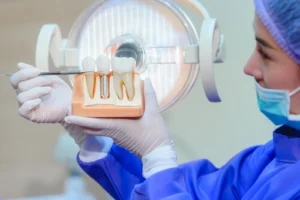
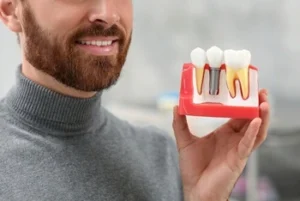
A front tooth implant is a specific dental implant used to restore one missing front tooth. It is made up of three primary components:
 The Implant Fixture
 The Implant Fixture
This is a small titanium post placed into the jawbone. It acts as an artificial tooth root. As healing progresses, the implant gradually bonds with the jawbone through a natural process called osseointegration.
The Abutment
This connector piece attaches to the implant after the healing period. It supports the final crown.
The Crown
The part you see is a custom-made crown designed to blend with your natural teeth in colour, contour, and proportions. The result is a natural appearance that blends with your existing teeth.
Unlike removable dentures or traditional dentures, a single tooth implant is fixed in place. It does not rely on adjacent teeth for support and does not need to be removed for cleaning.
Am I a Suitable Candidate for a Front Tooth Implant?
Not everyone is automatically eligible for implant placement. A thorough evaluation is essential. Your dentist will assess:
- Bone density in the jawbone
- Gum tissue health
- Overall oral health
- Dental history
- Medical history
Strong gum tissue and sufficient bone density are essential for a successful outcome. If gum disease is detected, it needs to be addressed before moving forward. When bone loss has already taken place, bone grafting may be advised to restore the area and create a stable foundation prior to implant placement.
Age alone is not a limiting factor, but jaw growth must be complete. A personalised treatment plan ensures the procedure suits your individual needs.
Understanding the Front Teeth Implant Procedure Step by Step
The front teeth implant procedure is carefully staged to maximise stability and aesthetics.
Step One: Assessment and Planning
A detailed consultation includes imaging to evaluate bone density and the condition of surrounding teeth. Your dentist designs a customised treatment plan tailored to your bite alignment and cosmetic goals.
If a damaged tooth is still present, it may be gently removed. In some cases, it is possible to implant immediately after extraction. This depends on the condition of the gum tissue and jawbone.
Step Two: Implant Placement
The implant procedure is typically carried out using local anaesthesia to keep the area comfortable throughout treatment. The titanium post is placed precisely into the jawbone. Careful positioning is essential for a natural appearance and proper alignment with nearby teeth.
After implant placement, the healing period begins. The implant integrates with the bone over several months, creating a strong foundation for the new tooth.
Step Three: Temporary Restoration
In many cases, a temporary tooth or temporary crown is fitted while the implant integrates. This allows you to maintain appearance during healing.
Step Four: Final Crown Placement
Once integration is complete, a custom-made crown is attached. The final crown is designed to match the shade and contour of your natural teeth and sit harmoniously along the gum line.
What Happens During the Healing Period?
 The healing period is a critical stage. During this time, the implant fuses with the jawbone. Most patients experience mild swelling or tenderness initially, which usually settles within a few days.
You may be advised to eat soft foods for a short period to protect the implant site. Maintaining excellent oral health is essential. Gentle brushing around the gum tissue and keeping the surrounding teeth clean support healing.
Follow-up appointments allow your dentist to monitor progress and ensure the implant integrates successfully.
How Natural Does a Front Tooth Implant Look?
A well-planned front tooth implant can be remarkably lifelike. Modern dental crowns are crafted with advanced materials that reflect light similarly to natural teeth. Subtle details such as translucency and surface texture are carefully considered.
The position of the gum line is equally important. A balanced contour ensures the artificial teeth blend seamlessly with other teeth.
When performed with precision, most people will not be able to distinguish a tooth implant from natural teeth.
Front Tooth Implant vs Other Replacement Options
When comparing tooth replacement options, it helps to understand the differences.
Single Tooth Implants
A single dental implant replaces the tooth root and crown independently. It does not rely on adjacent teeth and helps preserve bone density.
Dental Bridges
A bridge uses surrounding teeth for support. This may require reshaping healthy teeth, which some patients prefer to avoid.
Removable Dentures and Traditional Dentures
Removable dentures can replace multiple missing teeth but may feel less stable. They do not stimulate the jawbone in the same way as an implant.
For many patients with a missing front tooth, a front tooth implant offers the most stable and long-lasting solution.
What Are the Risks and How Can Implant Failure Be Prevented?
Like any surgical treatment, a dental implant procedure carries potential risks. Implant failure is uncommon but can occur due to:
- Poor bone density
- Untreated gum disease
- Smoking
- Inadequate oral hygiene
- Certain medical conditions
Careful planning, detailed assessment of medical history, and a well-structured treatment plan significantly reduce risk. Maintaining strong oral health habits after treatment also supports long-term oral health.
Regular reviews allow early detection of any concerns around the implant or surrounding teeth.
Can Bone Grafting Be Necessary?
If bone loss has already occurred due to prolonged tooth loss, bone grafting may be required before implant placement. This procedure rebuilds the jawbone to provide sufficient support.
Bone grafting improves implant stability and increases the likelihood of successful integration. Although it extends treatment time, it creates a stronger foundation for replacement teeth.
Life After a Front Tooth Implant
Once the final crown is placed, most patients resume normal activities quickly. A front tooth implant feels stable and functions like a natural tooth.
Daily care includes:
- Brushing twice daily
- Cleaning between teeth
- Attending routine dental visits
Unlike removable dentures, implants do not shift during speaking or eating. With proper care, a single tooth implant can last many years.
Common Questions About Front Tooth Implants
Can a front tooth implant be placed immediately after extraction?
In some cases, yes. If the gum tissue and jawbone are healthy, your dentist may implant immediately. However, each situation is assessed individually.
Is the procedure painful?
Local anaesthesia keeps the area comfortable during the implant procedure. Mild discomfort after surgery is common but manageable.
How long does the entire process take?
The full dental implant procedure may take several months due to the healing period required for integration.
Will it match my existing teeth?
A custom-made crown is carefully designed to match your existing teeth for a natural appearance.
Why Early Action Makes a Difference
When a missing front is addressed promptly, the risk of bone loss and shifting of nearby teeth decreases. Early intervention often simplifies the front teeth implant procedure and improves aesthetic outcomes.
Delaying tooth replacement can complicate treatment and increase the need for bone grafting later.
Final Thoughts on Restoring a Missing Front Tooth
 A front tooth implant is more than a cosmetic solution. It restores stability, preserves bone density, and supports long-term oral health. By replacing both the visible tooth and its root, it helps maintain the strength of the jawbone and protects surrounding teeth.
With thoughtful planning, precise implant placement, and ongoing care, a new tooth can look and function much like your natural teeth. If you are living with a missing tooth or damaged tooth, now is the time to explore a customised treatment plan tailored to your needs.
To take the next step, contact Harris Dental Boutique on 07 4158 5813 to arrange a consultation. Replacing a missing front tooth is not just about closing a gap. It is about restoring balance, protecting your other teeth, and supporting long-term oral health with professional guidance you can trust.
Note: Any surgical or invasive procedure carries risks. Before proceeding, you should seek a second opinion from an appropriately qualified health practitioner.
References
National Library of Medicine (U.S.). (2023). Dental bridges for partial tooth loss. In Canadian Agency for Drugs and Technologies in Health (Report No. RD0068). National Center for Biotechnology Information. https://www.ncbi.nlm.nih.gov/books/NBK596304/
National Health Service. (n.d.). Local anaesthesia. https://www.nhs.uk/tests-and-treatments/local-anaesthesia/
FDI World Dental Federation. (n.d.). Dental implants. https://www.fdiworlddental.org/dental-implants
Cleveland Clinic. (n.d.). Dental bone graft: Process, purpose and healing. https://my.clevelandclinic.org/health/treatments/21727-dental-bone-graft